Starting Solids Safely: Understanding Early Feeding Milestones
Early Foundations:
Before babies begin solid foods, they need several prerequisite skills that support safe feeding. According to the American Speech‑Language‑Hearing Association (ASHA), readiness includes:
Head and neck control - the ability to sit upright with minimal support, typically emerging around 6 months.
Oral‑motor readiness - coordinated jaw movement, lip closure, and tongue control to move food from the front to the back of the mouth.
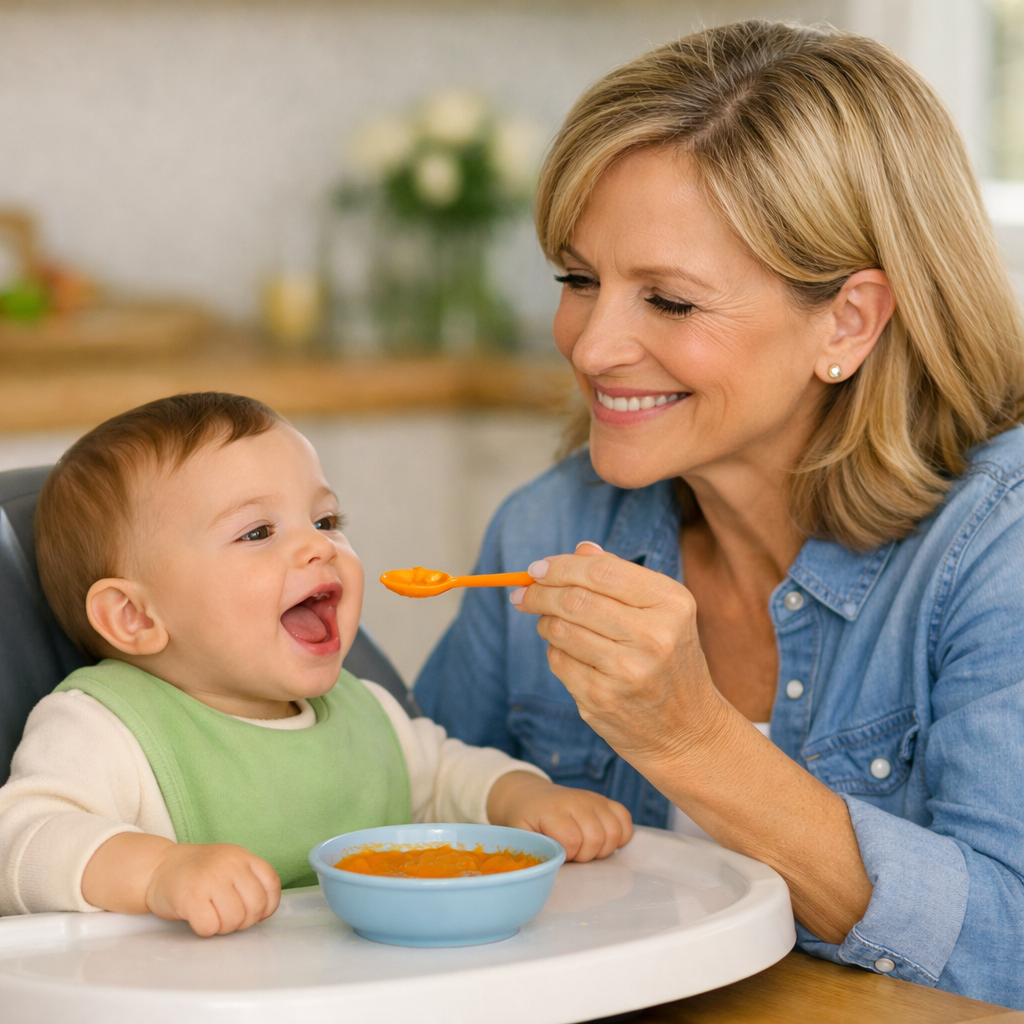
Interest in food - leaning forward, watching others eat, or opening the mouth when a spoon approaches.
Breathing-swallowing coordination - essential for safely managing new textures.
These foundations help ensure that the transition to solids is safe, comfortable, and developmentally appropriate.
-Signs Your Baby Is Ready for the First Stage of Solid Foods:
ASHA notes that most babies show readiness for smooth baby foods (purees) between 4-6 months, though every child develops at their own pace. Look for:
Sitting upright with good head control
Opening the mouth when food approaches
Showing curiosity about food
Moving purée from the front to the back of the mouth
A reduced tongue‑thrust reflex
Beginning early self‑feeding attempts around 6-9 months
These signs indicate that your baby is developing the oral‑motor and postural control needed for safe feeding.
Typical Feeding Progression:
Feeding skills develop gradually. Early on, babies may only manage smooth purees. As oral‑motor skills strengthen, they begin exploring mashed foods, soft lumps, and eventually soft solids. By the end of the first year, many babies can bite soft foods, pick up small pieces, and begin early rotary chewing.
Below is a brief ASHA‑aligned summary of typical feeding progression:
Birth to 3 Months: Human milk and/or formula
4 to 6 Months: Human milk and/or formula; smooth purees with no lumps
6 to 9 Months: Human milk and/or formula; smooth purees; soft, chewable solids cut into strips (pancake, toast, cheese)
9 to 12 Months: Soft, bite‑sized foods such as banana slices, cheese cubes, or pasta; human milk and/or formula; small amounts of water
You can read more about ASHA’s feeding and swallowing milestones on their website.
What Not to Do:
To support safe feeding development, avoid:
Introducing solids before your baby can sit upright
Offering mixed textures too early
Forcing bites or overriding refusal cues
Misinterpreting gagging - ASHA emphasizes that gagging is a protective reflex, not misbehavior
Ignoring persistent coughing, choking, or difficulty managing textures
Following your baby’s cues helps build trust and supports healthy feeding habits.
Gentle, Responsive Feeding Strategies:
If your baby shows signs of readiness, begin with smooth purees and progress gradually.
Follow your baby’s cues - stop when they turn away or close their mouth
Encourage exploration and early self‑feeding
Model eating behaviors during family meals
Keep mealtimes calm, positive, and pressure‑free
These strategies align with ASHA’s guidance on responsive feeding and early oral‑motor development.
When to Consult a Speech‑Language Pathologist:
ASHA recommends seeking support from an SLP trained in pediatric feeding and swallowing if your baby:
Frequently coughs, gags, or chokes during meals
Has difficulty moving food around the mouth
Refuses most textures
Shows limited progress with solids
Has medical or developmental concerns that may affect feeding
Early evaluation can prevent long‑term feeding challenges and ensure safe, positive mealtime experiences.
Related blogs
More resources you might find helpful